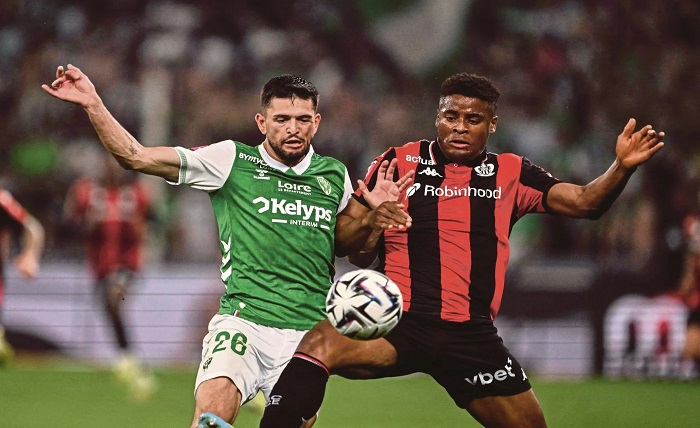
Half‑time betting only makes sense if you know which teams actually tend to be ahead after 45 minutes, not just who finishes strong over 90. In Ligue 1 2016/17, half‑time tables and first‑half goal data revealed a subset of clubs that regularly built early leads, creating a different risk–reward profile for HT and HT/FT markets than full‑time stats alone would suggest.
Why leading at half‑time matters differently from winning at full‑time
A team can be excellent over 90 minutes yet still be a poor candidate for half‑time bets if it often starts slowly and turns games around late. Half‑time tables—“what if matches ended at 45 minutes?”—reframe the Ligue 1 2016/17 standings by ranking teams on their HT results, showing who was typically in front, level or behind at the break, independent of the final outcome. The gap between that table and the standard full‑time rankings is where many of the interesting HT opportunities sat.
This difference also matters for HT/FT bets, where you must correctly predict both who leads at half‑time and who wins at full‑time. Educational pieces on HT/FT markets stress that you need separate views of early‑game and full‑game behaviour—first‑half trends for the HT leg, overall resilience or fragility for the FT leg—because you are effectively betting on the narrative arc of the match rather than a single result.
How half‑time tables highlighted Ligue 1 2016/17 “fast starters”
Data providers now publish half‑time tables for Ligue 1 that isolate first‑half results, and similar structures can be generated historically for seasons like 2016/17. These tables effectively answer three questions for each club: how often were they leading, drawing or trailing after 45 minutes; how many “HT points” did they accumulate; and how that performance looked home versus away.
From a betting angle, teams that were frequently ahead at half‑time shared some consistent traits:
- They scored the first goal in a high percentage of matches.
- They conceded relatively few early goals.
- Their home half‑time record was especially strong, reflecting early territorial pressure.
Crucially, those characteristics did not always line up perfectly with the final league standings. Some mid‑table teams in 2016/17 showed stronger half‑time profiles than their final points totals suggested because they struggled to maintain control in second halves, creating a gap between HT reliability and FT inconsistency.
Using first‑half goal stats to support HT market ideas
Beyond pure HT results, first‑half goal statistics provide another way to check whether a team is genuinely suited to half‑time betting. Strategy pieces on first‑half markets highlight indicators such as the percentage of matches with over 0.5 and over 1.5 goals before the break, the rate at which a team scores or concedes in the first half, and how often it wins HT at home. Together, these metrics show whether a side’s early advantages come from solid attacking intent, defensive caution, or a combination of both.
For Ligue‑level competitions, datasets on 1st/2nd‑half goals aggregate total and average goals per half by team, which can be applied back to seasons like 2016/17. When a club appears near the top of both “leading at HT” rankings and first‑half over‑0.5 statistics, you have a clearer case that it consistently imposes itself early. Conversely, a team might win HT often but with many 1–0, low‑chance first halves, making it more appealing in HT 1X2 markets than in first‑half goal overs.
Comparing HT specialists to full‑time performance
Because HT behaviour can diverge from FT outcomes, it is useful to conceptually compare how a “fast starter” might look in different tables. Sites that provide separate full‑time and half‑time standings effectively allow you to imagine two parallel leagues: one that stops at 45 minutes, and one that plays out the full 90. Some teams climb several “places” in the hypothetical HT league; others drop, indicating they either rely heavily on late surges or on stabilising games after poor starts.
This split creates distinct betting angles:
- Teams high in both HT and FT tables fit straightforward HT win and HT/FT “1/1” scenarios.
- Teams strong at HT but volatile by FT can justify HT‑win plus FT‑draw or even HT‑win/FT‑loss combinations at longer prices.
- Teams that rarely lead at HT but often win by FT are poor HT candidates yet interesting for comeback‑oriented in‑play strategies.
Educational HT/FT guides explicitly recommend this dual analysis: look at first‑half trends, then overlay full‑time form and home/away splits before deciding which side of the HT and HT/FT markets—if any—offers genuine value.
How a betting interface turned HT tendencies into real bets
In practice, recognising which Ligue 1 2016/17 teams often led at half‑time only mattered when it was connected to available markets. After identifying strong HT profiles from half‑time tables and first‑half goal stats, a disciplined bettor would move into their chosen betting interface to see how those patterns were priced. In that action phase, a service such as auto ufabet served as the transactional layer where data‑driven ideas about fast starters met concrete odds on HT 1X2, first‑half handicaps and HT/FT combinations. The key was not to bet every time a known “fast starter” played, but to compare its historical HT strength with the specific line and opponent on offer, and only stake when the price still implied more early uncertainty than the statistics supported.
Using a structured list to select HT‑friendly fixtures
Because the HT market offers higher variance than standard match‑winner bets, HT‑focused articles recommend using a short, repeatable checklist rather than relying on memory or narrative. For a season like Ligue 1 2016/17, that list naturally centred on HT leadership rates, first‑half goal timing and opponent style.
A practical HT‑selection list would revolve around:
- Does the home team lead at HT in a significantly higher share of matches than the league average?
- Are its first‑half over‑0.5 and “scored in first half” percentages strong, especially at home?
- Does the opponent have a history of slow starts, often going in level or behind at the break?
- Do current factors—fatigue, injuries, motivation—support a proactive start from the stronger side?
Walking systematically through those questions made HT selections less about gut feelings and more about aligning bets with repeatable first‑half behaviour, rather than with full‑time reputations alone.
How half‑time leaders influenced in‑play and second‑half thinking
Identifying which Ligue 1 2016/17 teams usually led at HT also shaped expectations for what happened next. In‑play strategy guides note that matches where the favourite is ahead at half‑time tend to follow different paths from games where it trails, especially in terms of second‑half goal probabilities and comeback chances. A team that routinely converts early dominance into HT leads and then manages games calmly may suppress late scoring, making second‑half unders or low‑goal scenarios more reasonable once it is in front.
Conversely, if a known HT leader also has a record of losing control after the break, the HT state can set up HT/FT reversals or second‑half draw/win opportunities for the underdog. That is why HT‑score‑line analyses explicitly tie first‑half outcomes to second‑half goal likelihoods and trading ideas: the same data that identifies fast starters also tells you whether those early leads usually stick or often collapse under later pressure.
Where focusing on HT leaders can go wrong
There are several ways an obsession with half‑time leaders from 2016/17 could mislead bettors. First, small samples and changing conditions matter: a club’s HT profile over one season may be heavily influenced by a specific coach, formation or key player that does not persist, making it risky to project forward without adjustment. Second, markets adapt; once a team becomes known as a reliable fast starter, bookmakers shorten its HT prices, compressing the edge that early statistics once offered.
Finally, some matches simply do not fit past patterns because of injuries, tactical changes or high‑stakes contexts that alter risk tolerance in the opening 45 minutes. Strategy content repeatedly warns against treating HT numbers as guarantees; instead, they should be one layer among many, checked alongside current team news, fixture congestion and motivational factors before any bet is placed.
How HT‑focused thinking translates into broader betting ecosystems
The methods used to identify prime HT teams in Ligue 1 2016/17 now extend across leagues through widely available half‑time tables and first‑half stats. Data hubs routinely track how often teams lead, trail or draw at the break, how first‑half goals distribute, and how that compares to league norms. In today’s wider betting environment, where football markets sit alongside other products in multi‑product digital venues, that same logic still applies: isolate who starts fast, map how that interacts with both HT and HT/FT markets, and only then judge whether the prices on offer—regardless of whether they sit in a sportsbook area, exchange or casino online website—fairly reflect the real probabilities implied by first‑half behaviour.
Summary
In Ligue 1 2016/17, a distinct group of teams repeatedly turned early dominance into half‑time leads, a trait that standard full‑time tables largely hide but half‑time standings and first‑half goal stats make visible. By building HT and HT/FT decisions on those specialised metrics—while still checking current context and market adjustment—bettors could align their half‑time positions with how matches actually began on the pitch, rather than with reputations built on 90‑minute outcomes alone.